DIRECTOR
> THEATRE | MUSICAL THEATRE | OPERA | SPECIAL PROJECTS
Dulce pájaro de juventud
(2025)
I'm not asking for your compassion, just that you understand me—and not even that—no. Just that you recognize me in you, and our enemy, time, in all of us.
Tennessee Williams, Sweet bird of Youth,
Act III
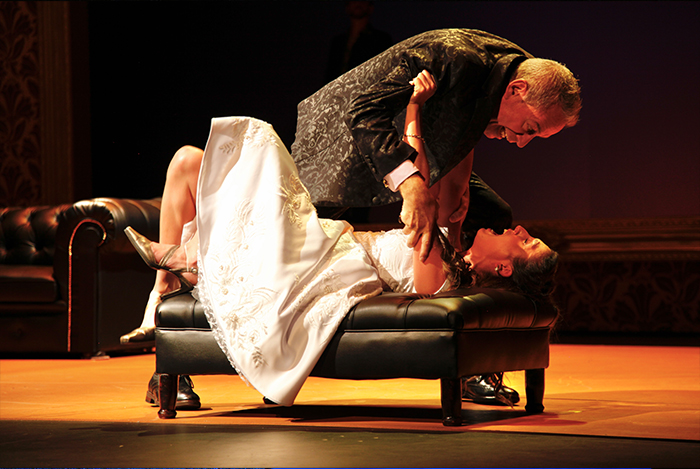
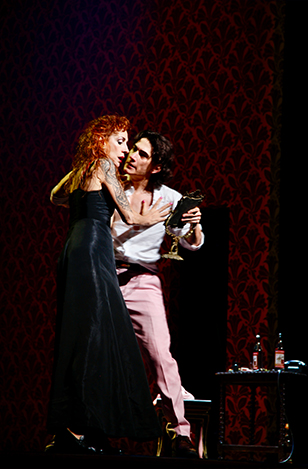
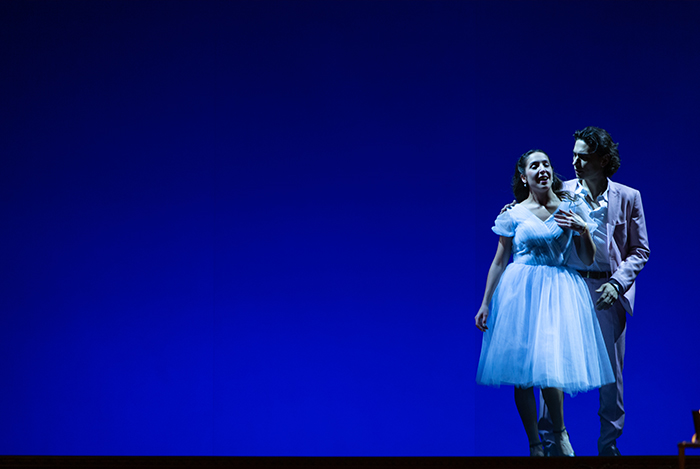
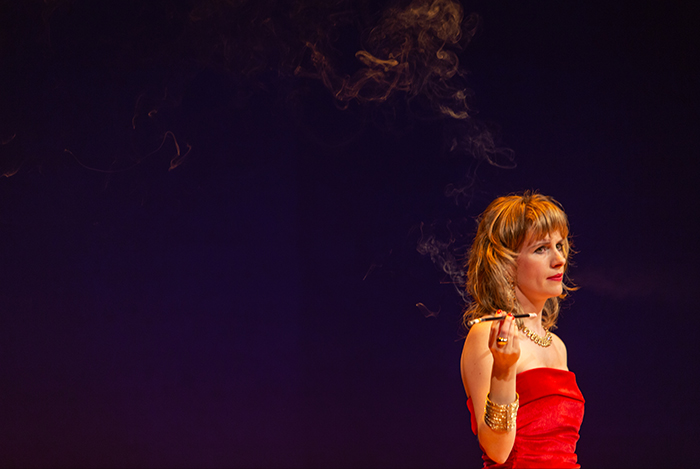
Sweet Bird of Youth is an undisputed but secret classic by that giant Tennessee Williams. Its destiny seems to have been to remain in the shadow of "The Glass Menagerie" or "A Streetcar Named Desire," but when one approaches this text, when one immerses oneself in it, one cannot help but face the abyss and horror: before our eyes unfolds the violence that power wields over our bodies and our dreams, and, above that violence, the piercing force of time that devours everything. "Time, our enemy"—Tennessee knew how to name this work when he began to sketch it.
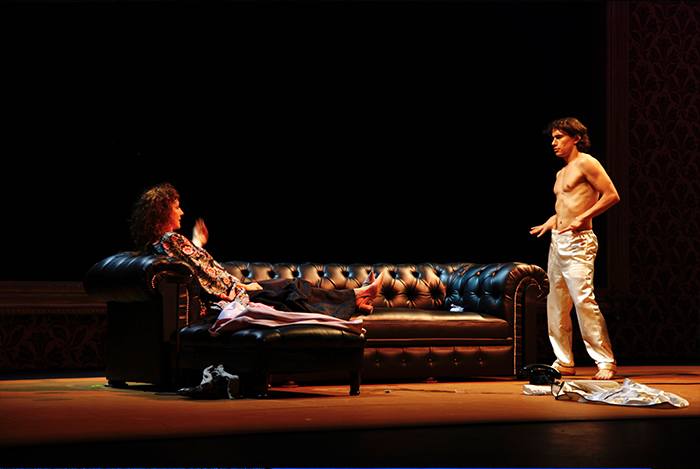
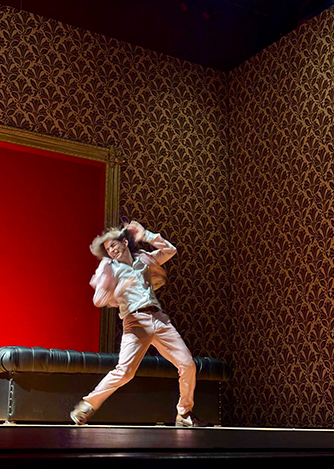
In this present, where world leaders repeat the horrors of the past, Sweet Bird of Youth sheds light on these dangers; comes to tell us once again the story of a man: Chance Wayne (how can we fail to admire Tennessee Williams' spirit of transforming his theatre into an auto sacramental when the protagonist of this play is named Chance (opportunity, chance, possibility)) who, despite the blows of fate, continues pursuing his dream, facing the horror of the world with the tools that are his: those that define us as human.
Sweet Bird of Youth awakens, despite its tragic nature, a profound faith in humanity, a faith that seems to be dissolving in technocracy, totalitarian regimes, and a lack of spirituality.
This play once again immerses us in mystery, in the full wonder of knowing ourselves to be human.
And thus, we embrace, once again, who we are.
This wonderful cast, the directors and staff of the Comedia Nacional and the Teatro Solís, Oria Puppo, and I want to give you the joy that is this play, the joy that an author like Tennessee continues to accompany us.
Welcome to the party.
Alejandro Tantanian
-
Sweet Bird of Youth
By Tennessee WilliamsTranslation: Alejandro Tantanian
Version:Oria Puppo, Alejandro Tantanian
-
Cast (in Order of Appearance):
Boss Finley: Mario Ferreira
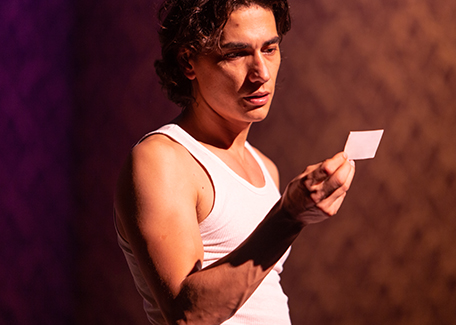
Chance Wayne: Enzo Vogrincic (guest actor)
Princess Kosmonopolis:Alejandra Wolff
Heavenly Finley: Dulce Elina Marighetti
George Scudder: Leandro Nuñez
Tom Junior: Pablo Musetti
Finley's Secretary: Rosario Martínez
Lucy: Stefanie Neukirch
Stuff: Luis Martínez
The Provocateur: Pablo Varahillon
Dan Hatcher: Diego Arbelo
Scotty:Pablo Varahillon
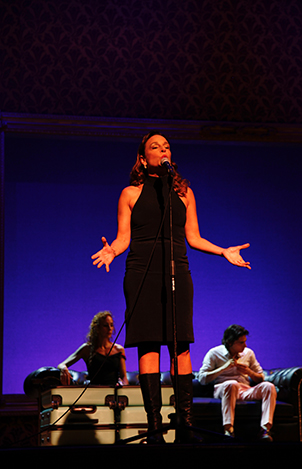
Narrator: Natalia Chiarelli
Security Guard: Diego Arbelo> -
Planimetría: Florencia Tutusaus
Sound Technician: Fernando “Tato” Castro
Video technician, editor, and producer: Miguel Grompone
Translators: Carmen Barral, Lucía Leite -
Choreography: Carolina Besuviesky
Musicalization: Alejandro Tantanian
Light design: Ivana Domínguez
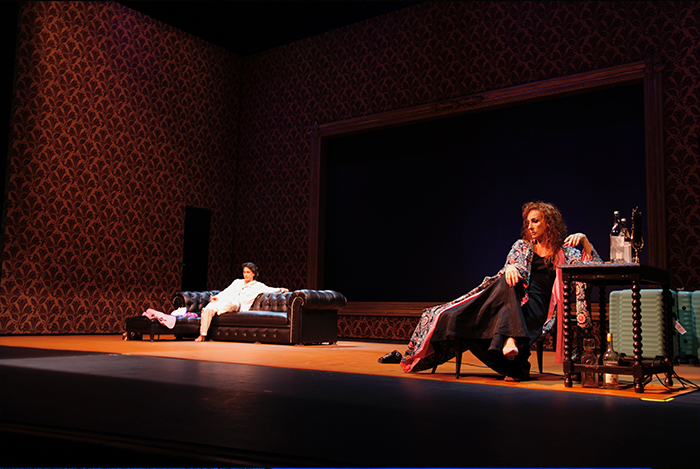
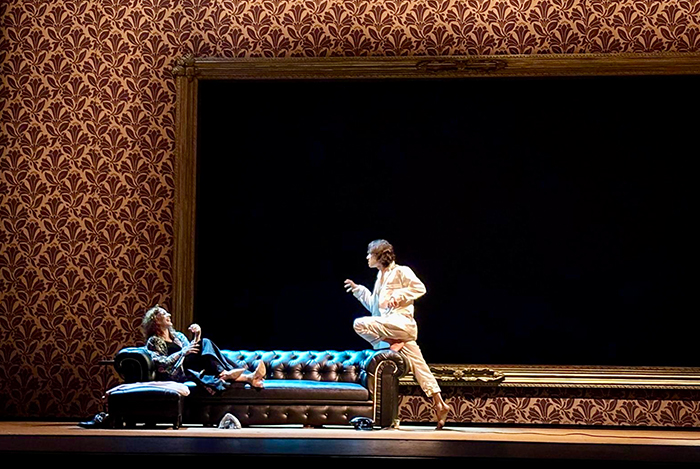
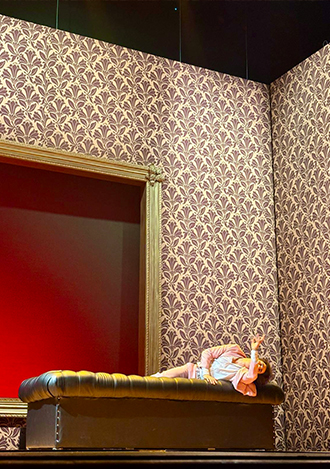
Set, costume, and video design: Oria Puppo - Director: Alejandro Tantanian
-
Running time: 120 minutos
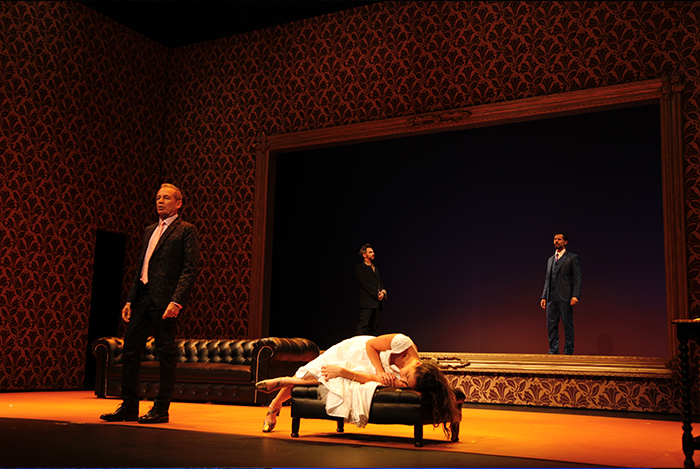
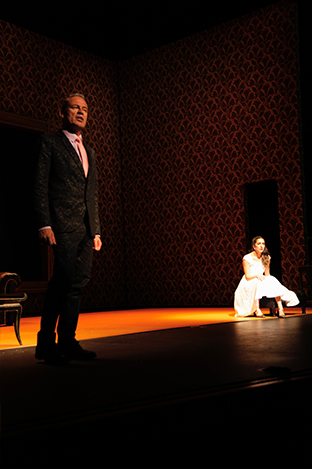
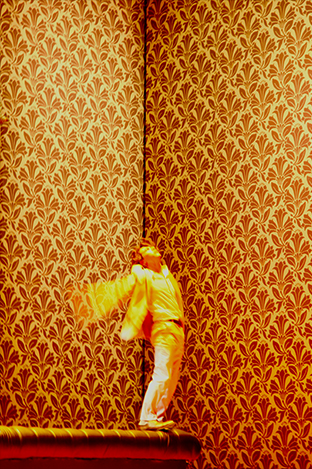
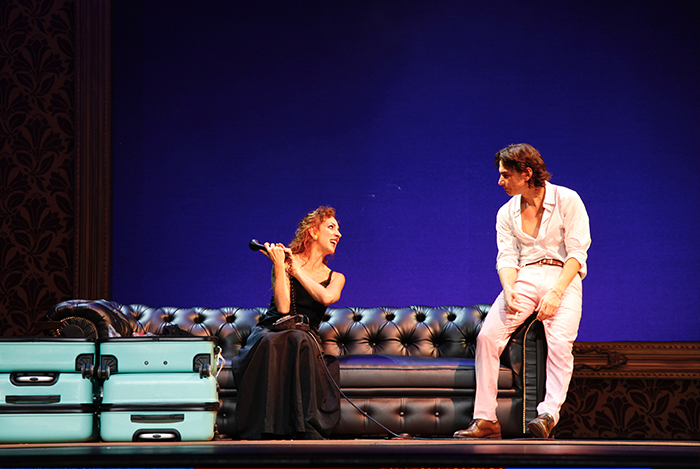
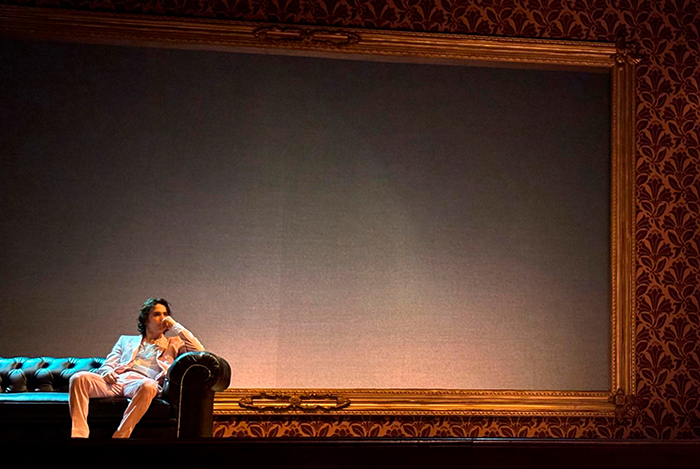
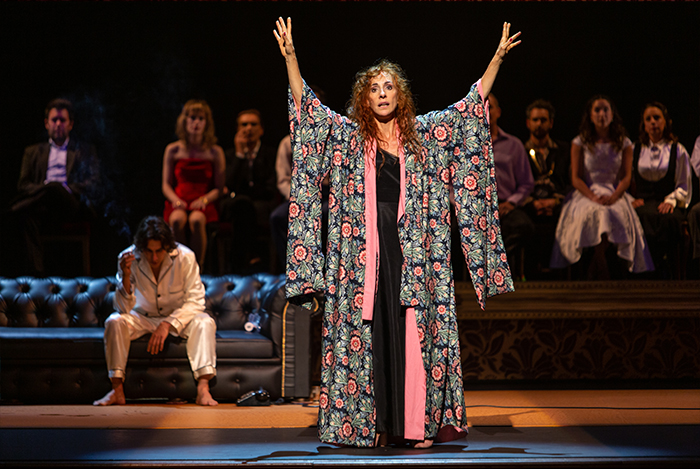
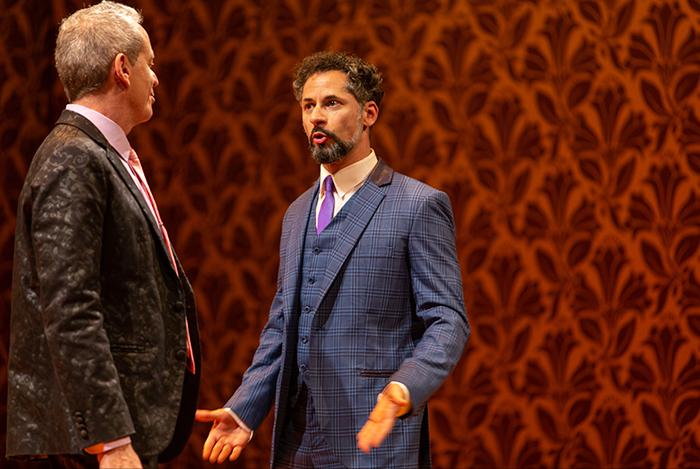
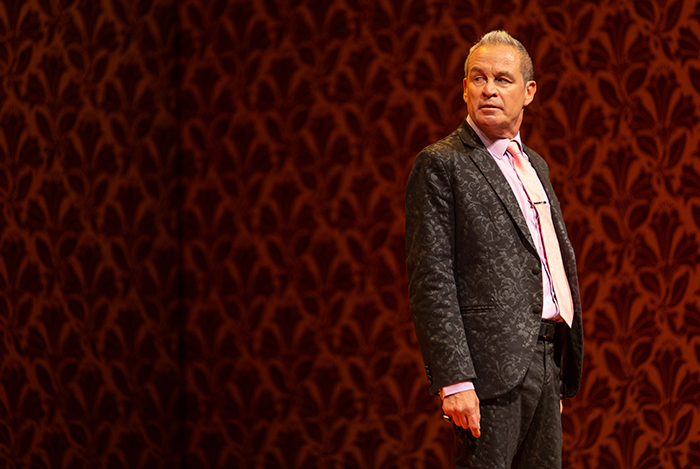
This show was produced by the National Comedy and premiered on March 27, 2025, Teatro Solís, Montevideo, Uruguay.
Reopening: Season 2026, at the same venue.